

Blog
The Taobao Shipping Process Explained: A Step-by-Step Guide for International Buyers

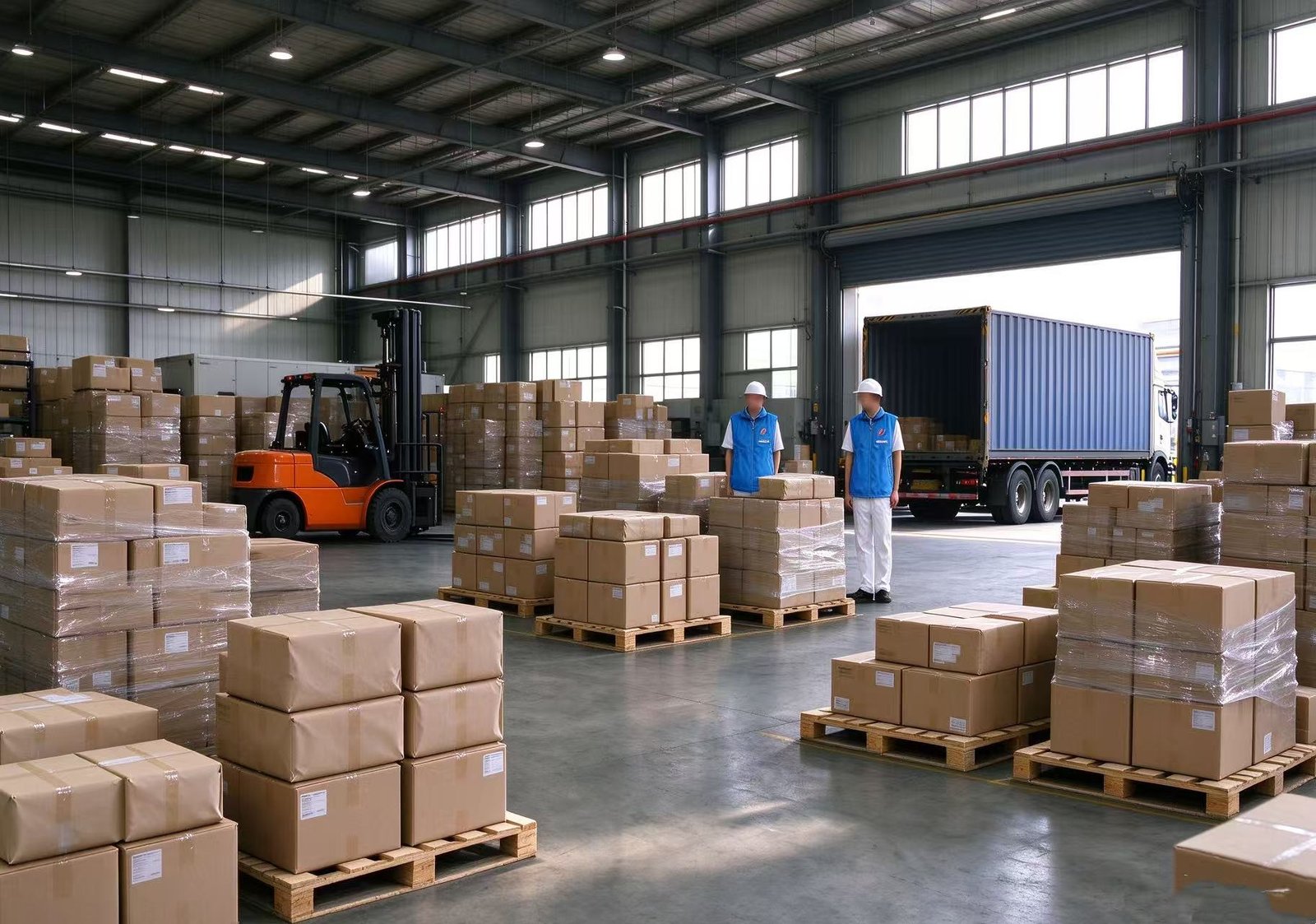
Buying from Taobao is one thing. Getting your goods safely across the border is another. Many international shoppers discover too late that the hardest part of a Taobao purchase was never the ordering itself—it was figuring out how all those separate seller parcels become one international shipment that arrives at your door intact.
If you have ever felt lost between Chinese seller addresses, warehouse notices, and confusing shipping quotes. This guide walks you through every stage of the Taobao shipping process in plain English, so you know exactly what to expect, what to do.
Before You Start: Why Taobao Shipping Feels Complicated
Taobao was built for domestic Chinese e-commerce. Its sellers, couriers, and checkout system all assume a Chinese address. When you live outside China, that assumption breaks down immediately—unless you use a consolidation service.
Consolidation is the bridge between Taobao’s domestic marketplace and your country’s doorstep. It lets you buy from dozens of different Taobao stores, have everything delivered to a warehouse in China, and then ship the combined goods to you as one package.
-
- You order from Taobao sellers using a warehouse address
-
- Sellers deliver your parcels to the warehouse within China
-
- The warehouse receives, inspects, and packs your items together
-
- The consolidated box ships internationally by air, sea, or express
-
- Your destination country clears customs and delivers to your door
Let’s break each stage down.
Step 1: Get a China Warehouse Address and Place Your Orders
Everything starts with one non-negotiable rule: do not enter your home address at Taobao checkout. Almost all Taobao sellers will refuse or fail to ship overseas directly.
Instead, you sign up with a freight forwarder or consolidation agent, who gives you a dedicated warehouse address in China. This address looks like a normal Chinese address, and it includes your unique member ID or reference number.
When you place each order:
-
- Copy the warehouse address exactly as your agent provides it
-
- Make sure your buyer name or reference code matches your account
-
- Keep a spreadsheet or list of every order: seller name, item, quantity, and order number
A small typo in the warehouse address or reference code can cause a parcel to go missing. Once a seller hands a package to a domestic courier, correcting it is difficult and slow.
Step 2: Wait for All Sellers to Ship Domestically
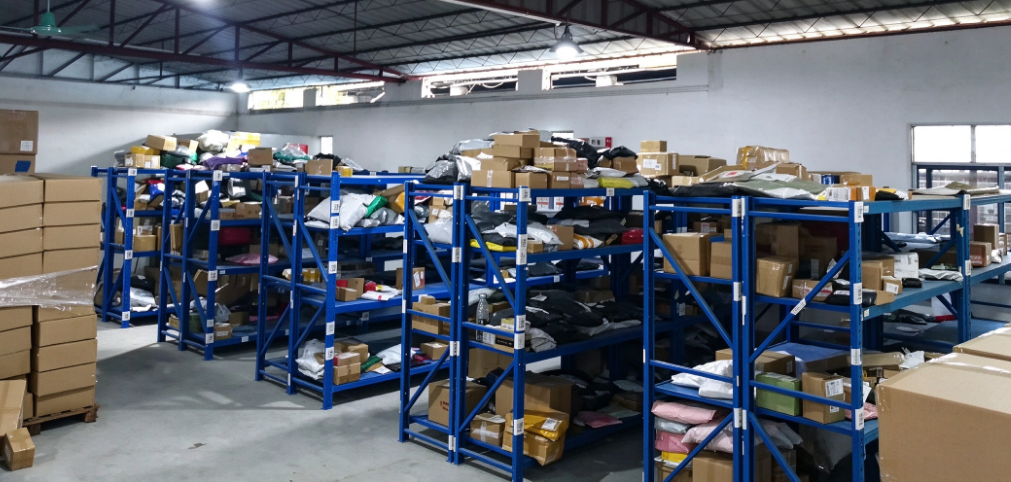
After you check out, each seller packs and ships your order through a Chinese domestic courier—commonly ZTO, YTO, STO, or Yunda.
Here is what happens next:
-
- Sellers ship on their own schedules. Some dispatch the same day; others take 3–5 business days.
-
- Parcels arrive at the warehouse one by one, not all at once.
-
- Each seller’s tracking number is different, and delivery speed varies.
This waiting period is normal and unavoidable. The whole point of consolidation is that you can buy from multiple stores and wait for everything to gather before shipping internationally.
Your job during this phase:
-
- Monitor each seller’s shipment status on Taobao
-
- Track the domestic couriers as they head to the warehouse
-
- Resolve any seller delays directly with the seller if needed
Do not ask your agent to ship before all parcels have arrived. Trying to rush this step usually means missing items or paying for two international shipments.
Step 3: Warehouse Receiving and Check-In
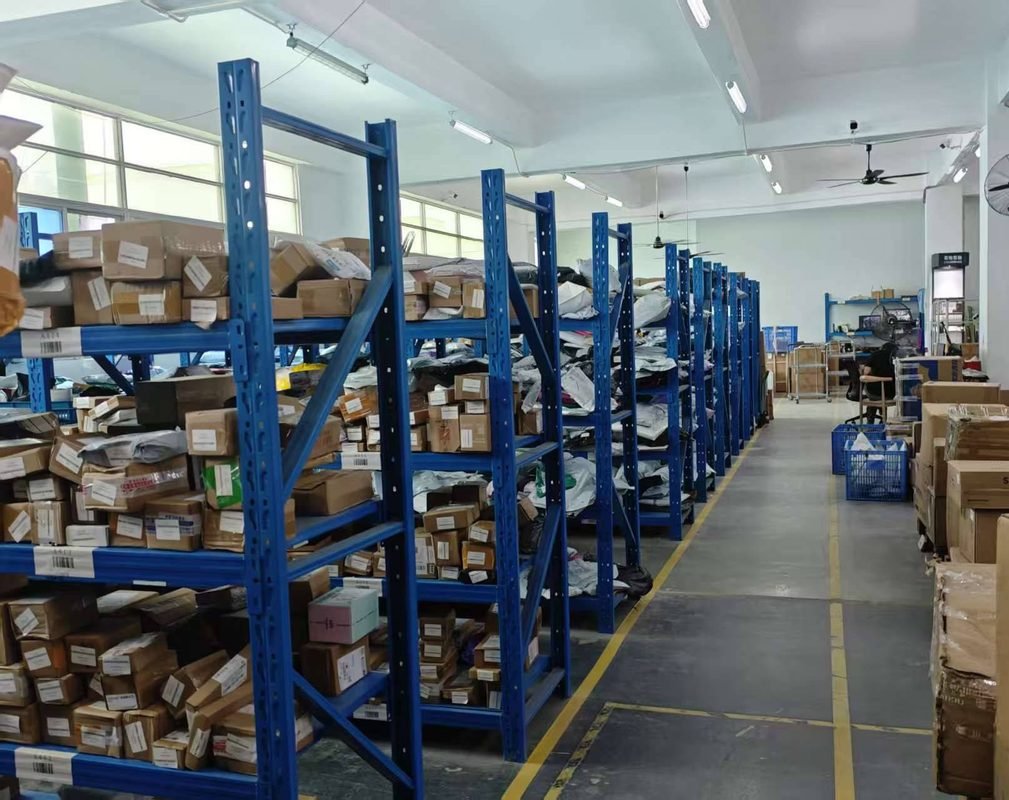
As each parcel reaches the warehouse, the staff signs for it and scans it into the system. This is the moment your order stops being “a seller parcel” and becomes “your cargo.”
A professional warehouse will:
-
- Physically receive each parcel and compare the delivery slip to your account
-
- Scan the parcel into your digital inventory so you can see it online
-
- Store parcels safely in your personal bin until all items arrive
At this stage, you should log into your agent’s system and confirm that the number of parcels received matches the number of orders you placed. If something is missing or has not arrived after a reasonable time, flag it early—while the seller is still reachable.
Step 4: Inspection: Check Your Items Before They Leave China
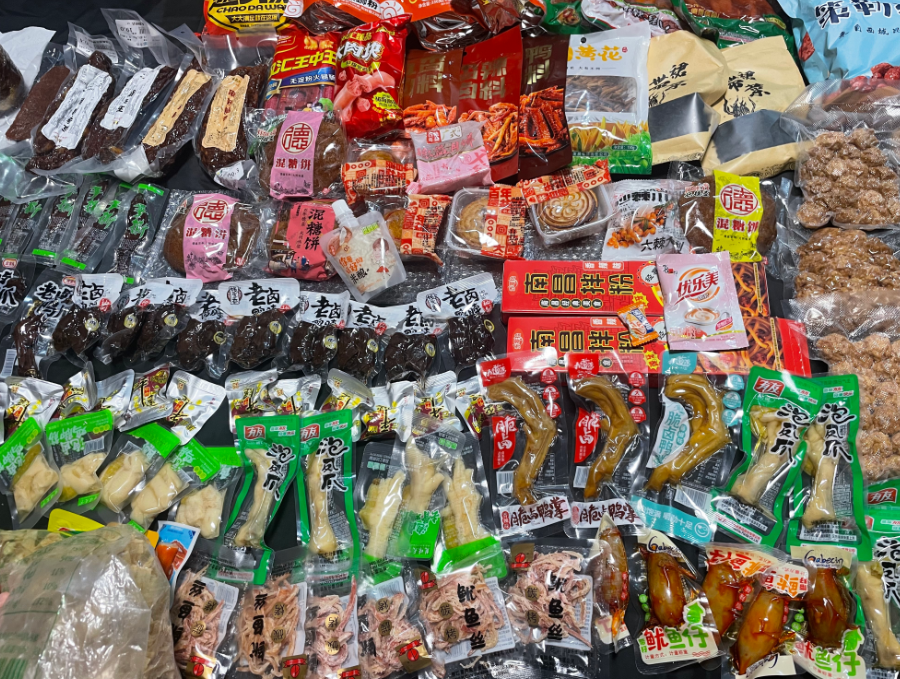
This is the single most important quality-control step in the entire process.
Once all parcels are in, the warehouse opens the packages and checks:
-
- Whether the item matches what you ordered (color, size, model)
-
- Whether the quantity is correct
-
- Whether the product looks damaged, defective, or counterfeit
-
- Whether fragile items are properly protected
Most agents send you photos of each opened item. You review the photos and either approve or ask for a replacement/return.
Why does this matter so much? Because once a box leaves China, returning or exchanging a defective item becomes prohibitively expensive and time-consuming. Catching a problem in the warehouse takes minutes; fixing it after international delivery can take weeks.
Step 5: Consolidation and Repacking

Once you approve the inspection, the warehouse packs everything into one export carton—or several, if your cargo is bulky.
Consolidation is not just “throwing things in a box.” A good repacking team will:
-
- Remove excess seller packaging, gift boxes, and filler that add unnecessary weight
-
- Combine small items tightly to reduce wasted space
-
- Wrap fragile items in bubble wrap and secure them inside the carton
-
- Heavy items at the bottom, light items on top
-
- Keep the final box dimensions within a reasonable weight limit
The goal is to lower the volumetric weight (chargeable weight) and protect your goods on the journey. Poor repacking leads to two costly problems: higher shipping bills because of wasted space, and broken items because of insufficient protection.
Step 6: Pick Your International Shipping Method
Before the box leaves the warehouse, you choose how it travels. The main options are:
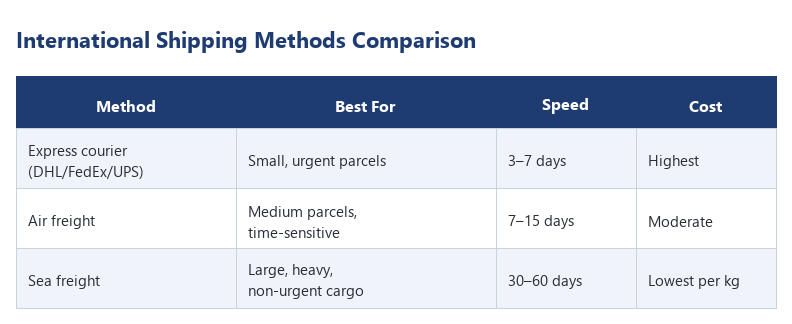
The right choice depends on what you bought, how soon you need it, and your budget. Do not pick based on price per kilogram alone. Ask your agent for a total landed cost estimate that includes all fees.
Also ask whether the quote is DDP (Delivered Duty Paid—taxes and customs included, one payment, door to door) or DDU/DAP (you pay duties on arrival). For first-time buyers, DDP is usually the simpler choice.
Step 7: Export Handling and International Transit
Your agent now prepares the export paperwork and hands your cargo to the carrier. This is the stage where the shipment officially leaves China.
During transit:
-
- Status updates may be less frequent than domestic delivery—this is normal
-
- Your box may be transferred between airlines, shipping lines, or hubs
-
- Weather, peak season, and port congestion can all cause delays
A reliable forwarder tracks your shipment throughout and alerts you if anything goes wrong. If a delay does happen, it is almost always caused by carrier capacity or customs issues—not by your Taobao sellers.
Step 8: Customs Clearance in Your Country

Every international shipment must pass through customs. This is not optional, and it is not something you can skip.
What happens at customs depends on your chosen shipping method:
-
- DDP shipments: Your agent handles all customs paperwork and duties in advance. You pay once, and you receive the box at your door with no extra charges.
-
- Non-DDP shipments: You or a local broker must clear the goods and pay import duties, taxes, and possibly brokerage fees before the parcel is released.
Common customs problems include:
-
- Undeclared or incorrectly declared item values
-
- Restricted or prohibited goods (some electronics, batteries, food, cosmetics have special rules)
-
- Missing or inaccurate importer information
To avoid surprises, tell your agent exactly what is inside the box and know your country’s import rules before you ship.
Step 9: Last-Mile Delivery to Your Door

Once customs releases your shipment, a local courier takes over and delivers it to your address.
For residential addresses, the courier may call or text before arrival. For large or heavy boxes, you may need to be home to sign for it.
When the box arrives:
-
- Check the outer packaging for crushing, water damage, or tape tampering
-
- If anything looks wrong, take photos immediately and contact your agent
-
- Open the box and confirm every item matches your order
This is the moment all the planning pays off.
Conclusion: Ship from Taobao with Confidence
Taobao consolidation is not a shortcut—it is a structured logistics process. Every step builds on the one before it. Get the early steps right (correct address, careful inspection, smart packing), and the later steps (international transit, customs, delivery) become far easier and cheaper.
For anyone who regularly sources from Taobao, understanding this process turns a confusing domestic marketplace into a reliable global sourcing channel. And working with an experienced freight forwarder removes most of the guesswork entirely.
If you want to buy from Taobao without worrying about international shipping, need a reliable China warehouse address, or are looking for a trustworthy consolidation partner or freight forwarder, Ollybuy Logistics is ready to help